The GüdDish Falafel
We studied 192 recipes from around the world and combined the highest rated 13. Then we built the BEST!
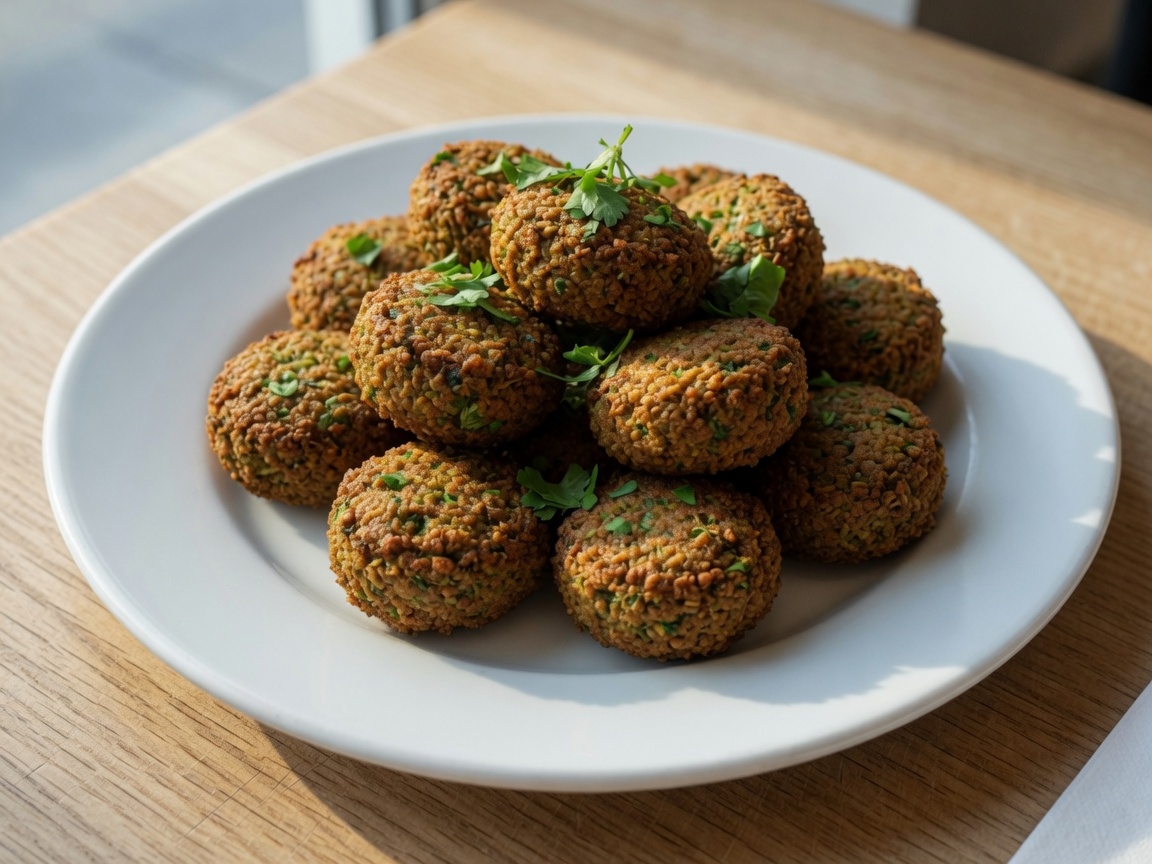
Ingredients
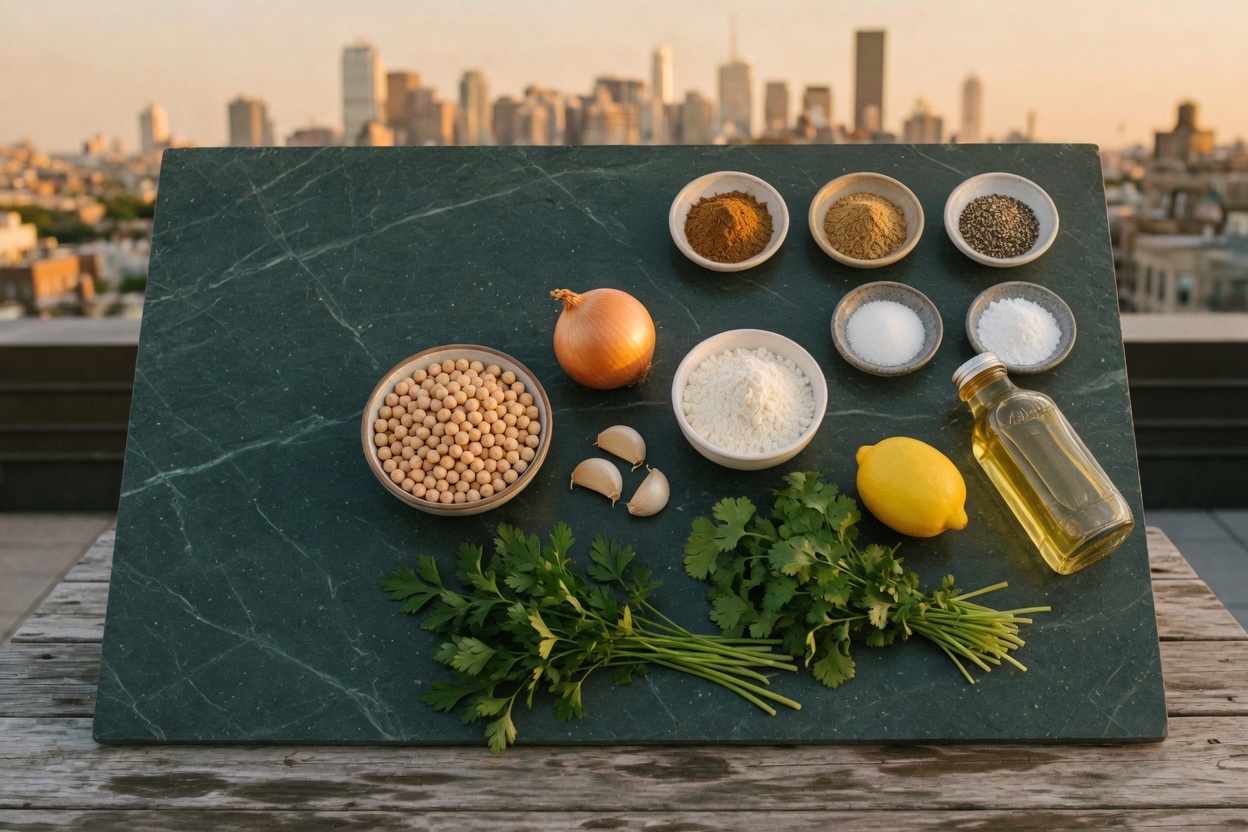
- 2 cups dried chickpeas
- 3 garlic cloves
- 1 yellow onion, coarsely chopped
- 4 cups vegetable oil, for frying
- 3 1/2 tbs all-purpose flour
- 1 lemon
- 2 tsp ground coriander
- 1 tsp baking powder
- 2/3 cup fresh parsley
- 1 1/4 tsp ground cumin
- 3/4 cup fresh cilantro
- 1/2 tsp ground black pepper
- 1 tsp kosher salt, plus more to taste
What the best recipes taught us
- Soak dried chickpeas overnight until they split easily when you press them. If you use canned chickpeas, the mix turns mushy and the falafel falls apart in the oil.
- Pulse the mix until it looks like coarse crumbs and holds together when you squeeze it. If you blend it completely smooth, the falafel will be dense and bland.
Method
- 1
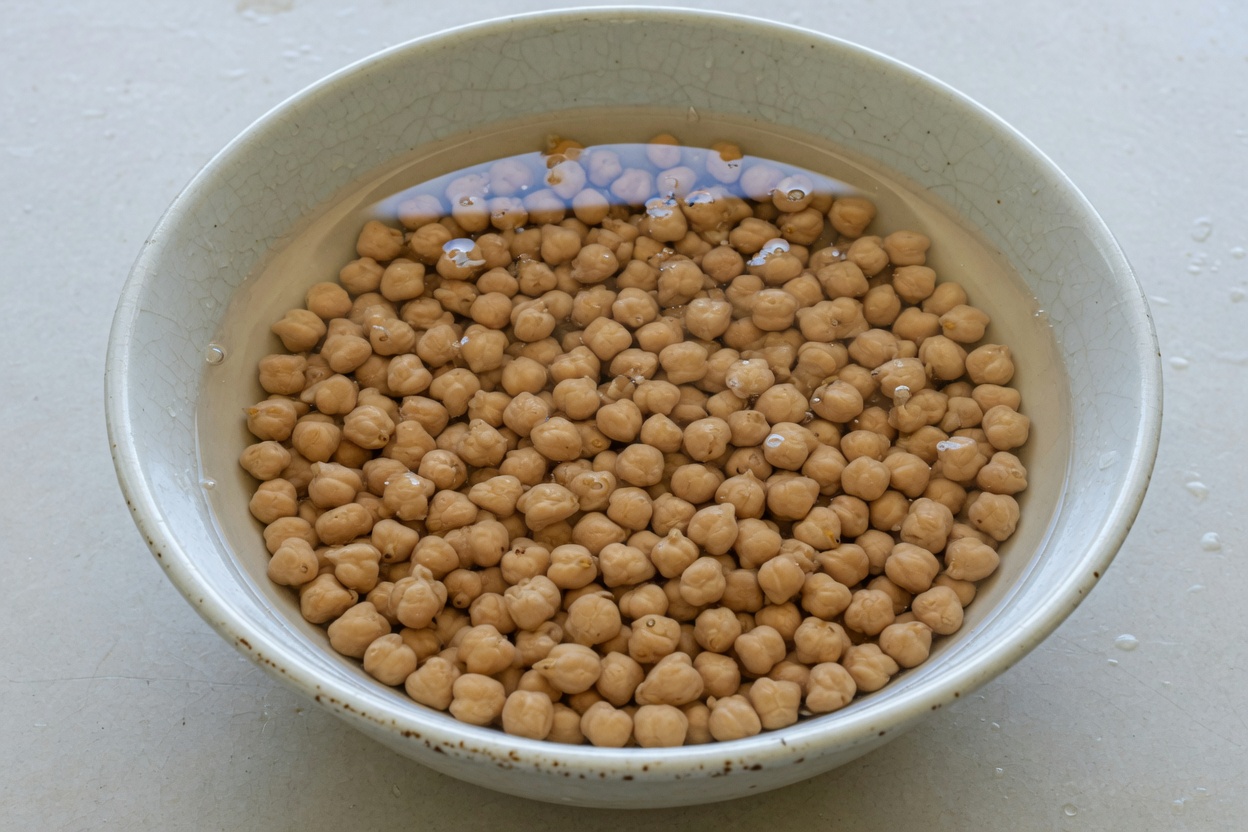
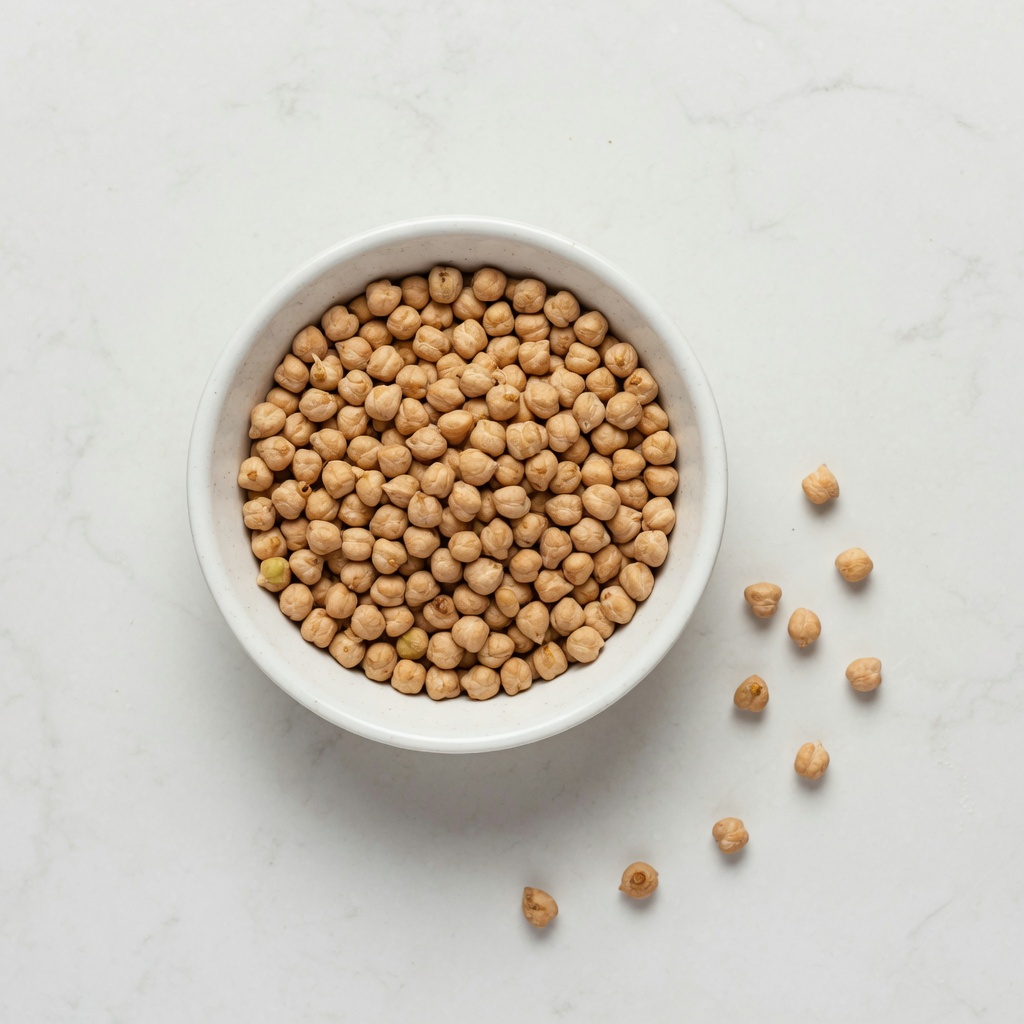
Put the dried chickpeas in a large bowl.
Cover them with water so they stay under the water as they swell.
Soak at room temperature for 12 hours, until a chickpea splits easily when you press it.
- 2
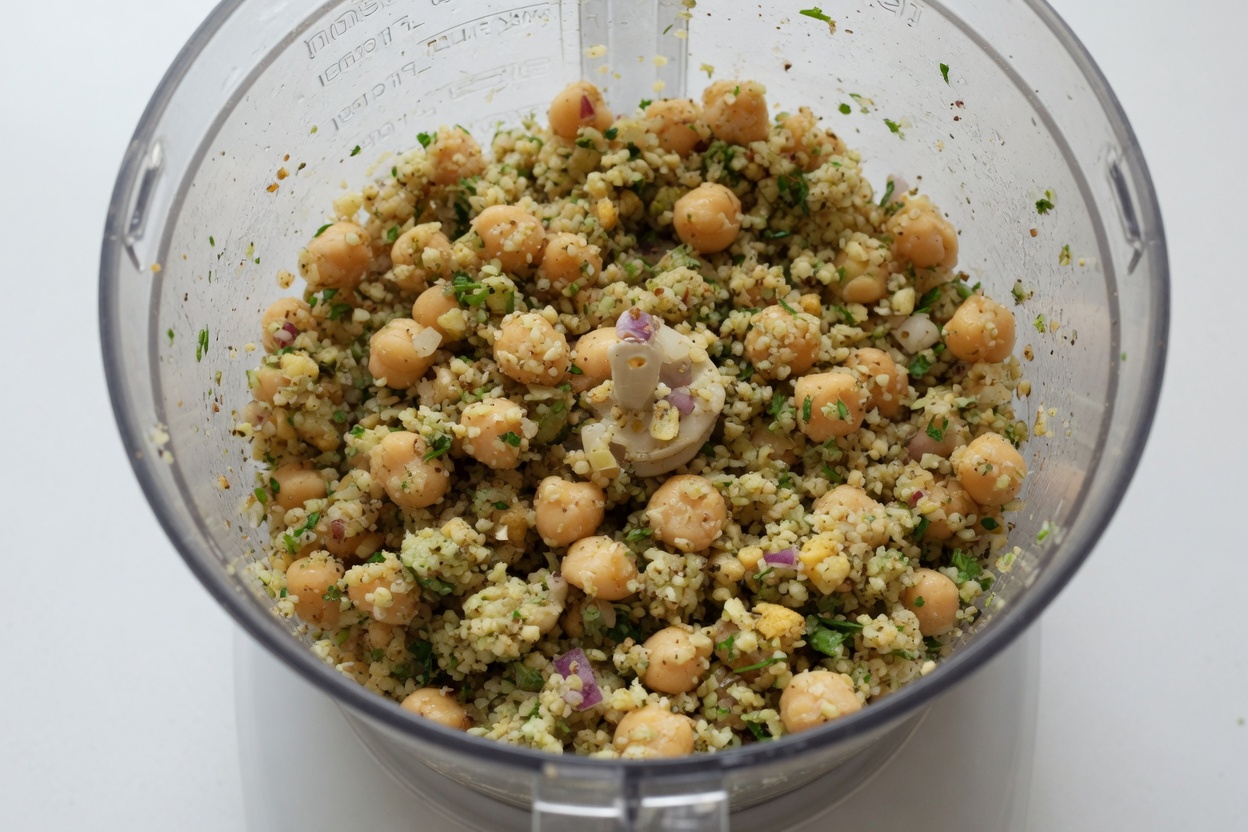
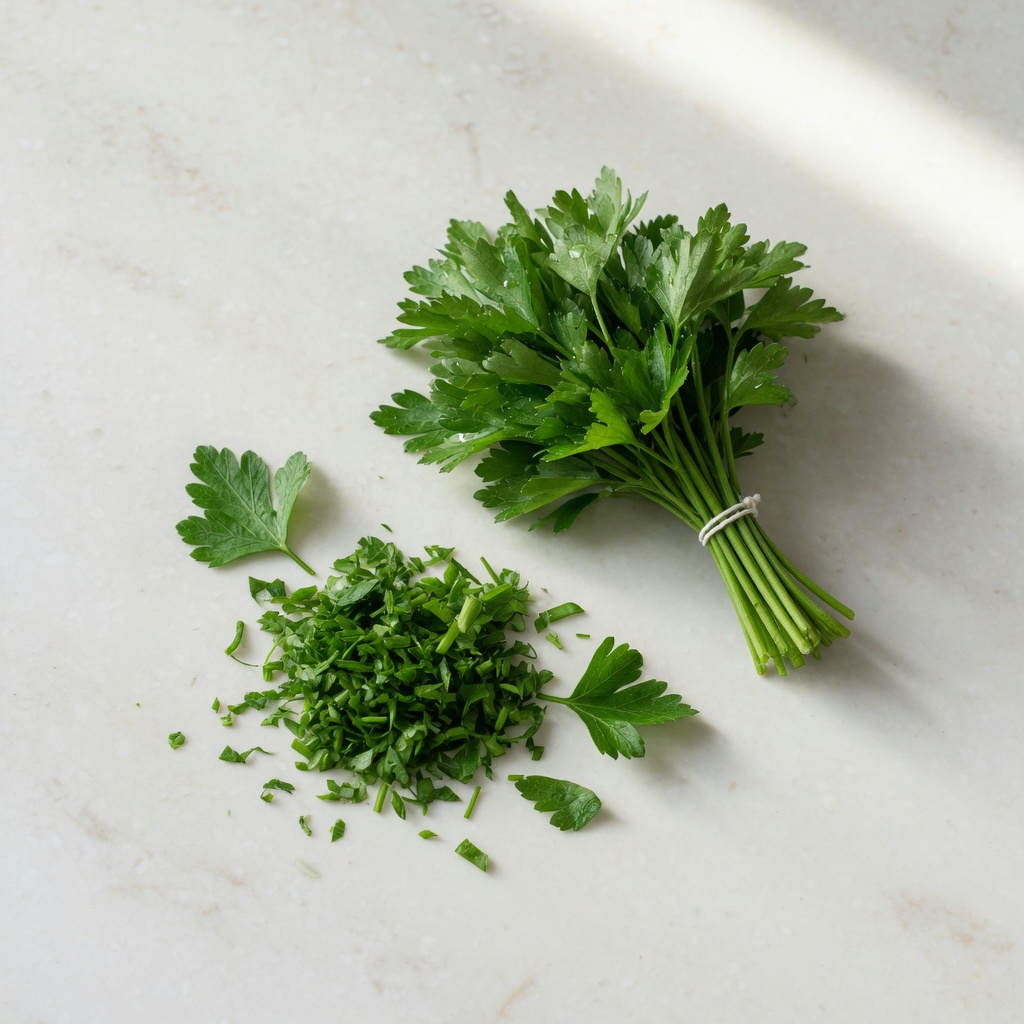
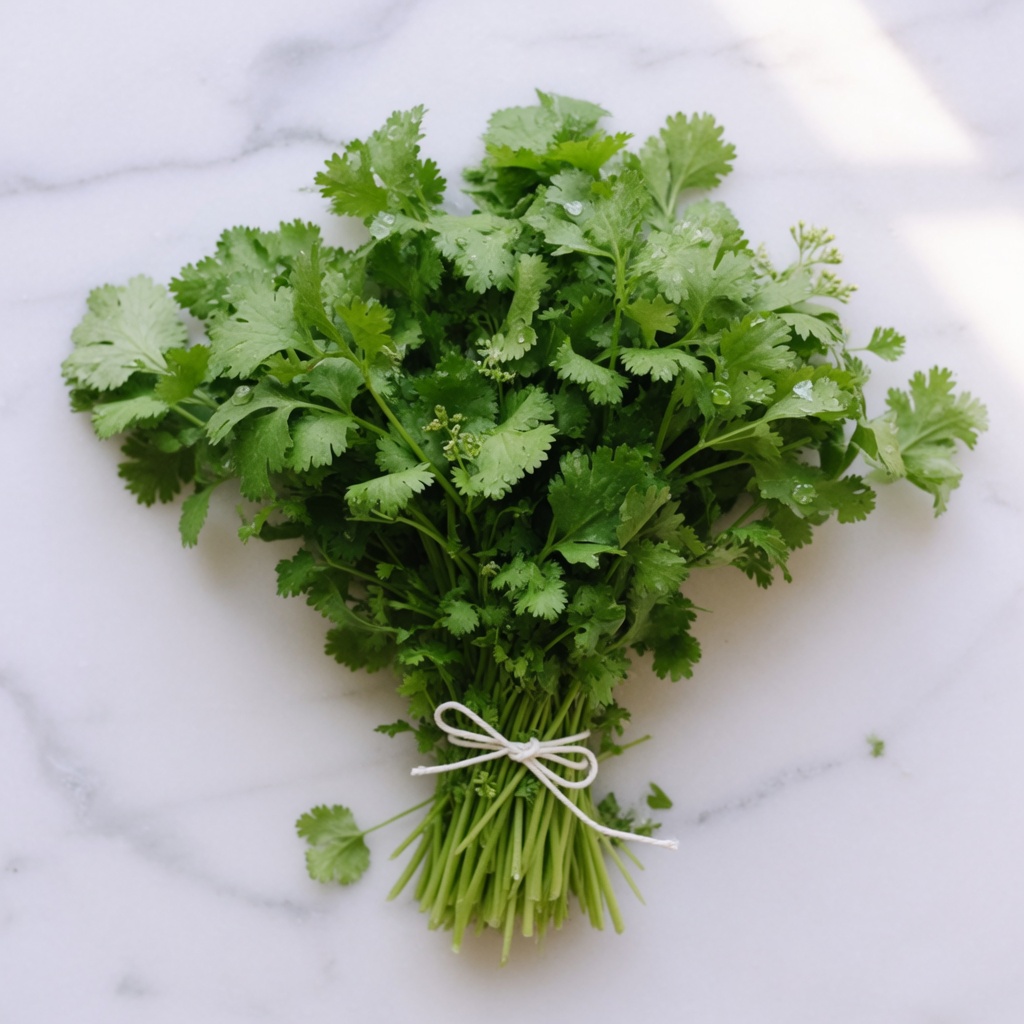
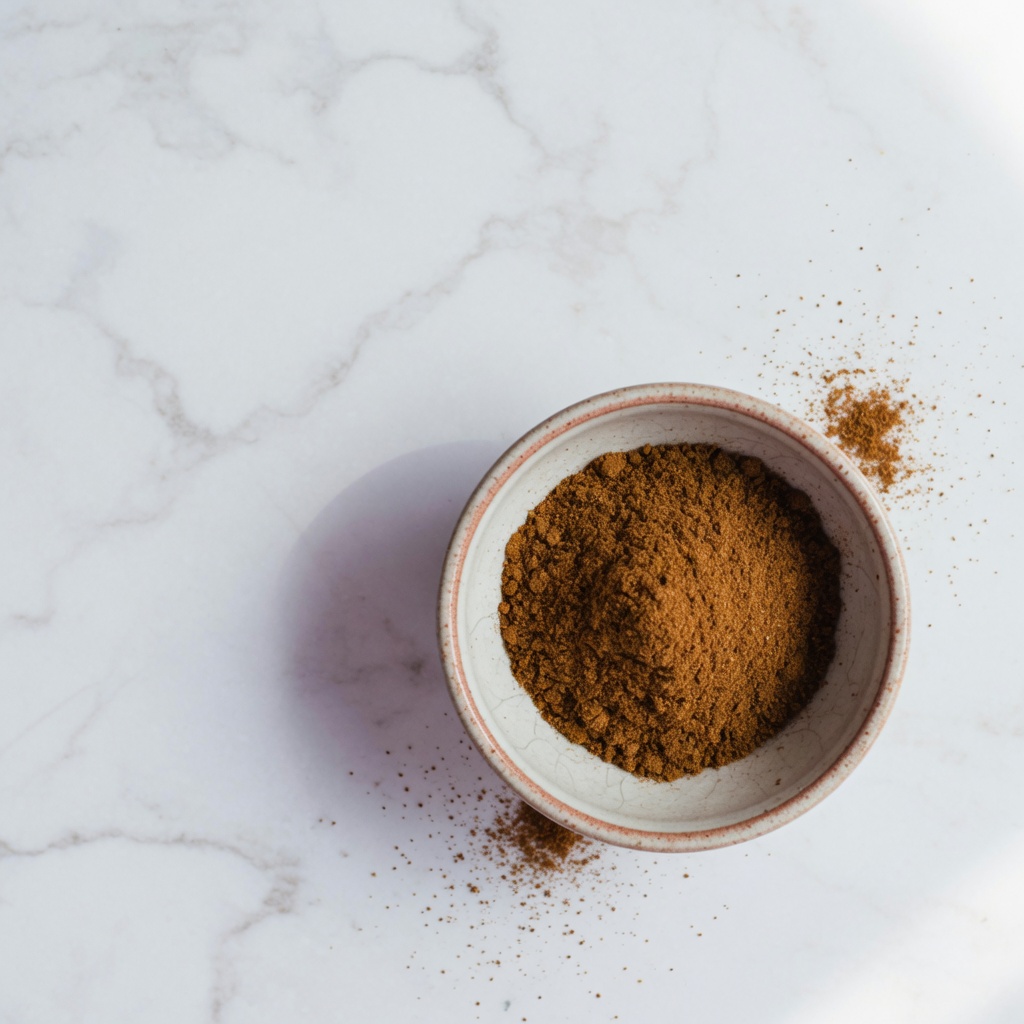

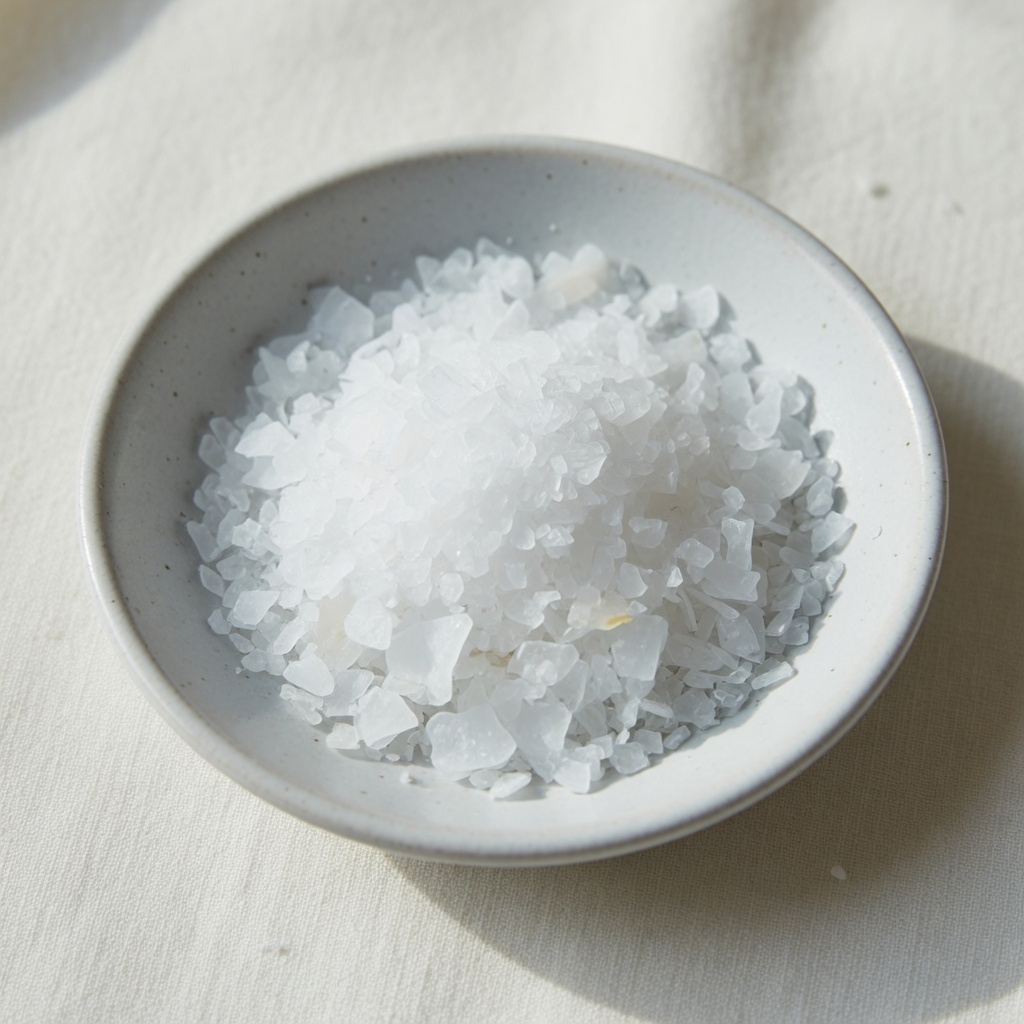
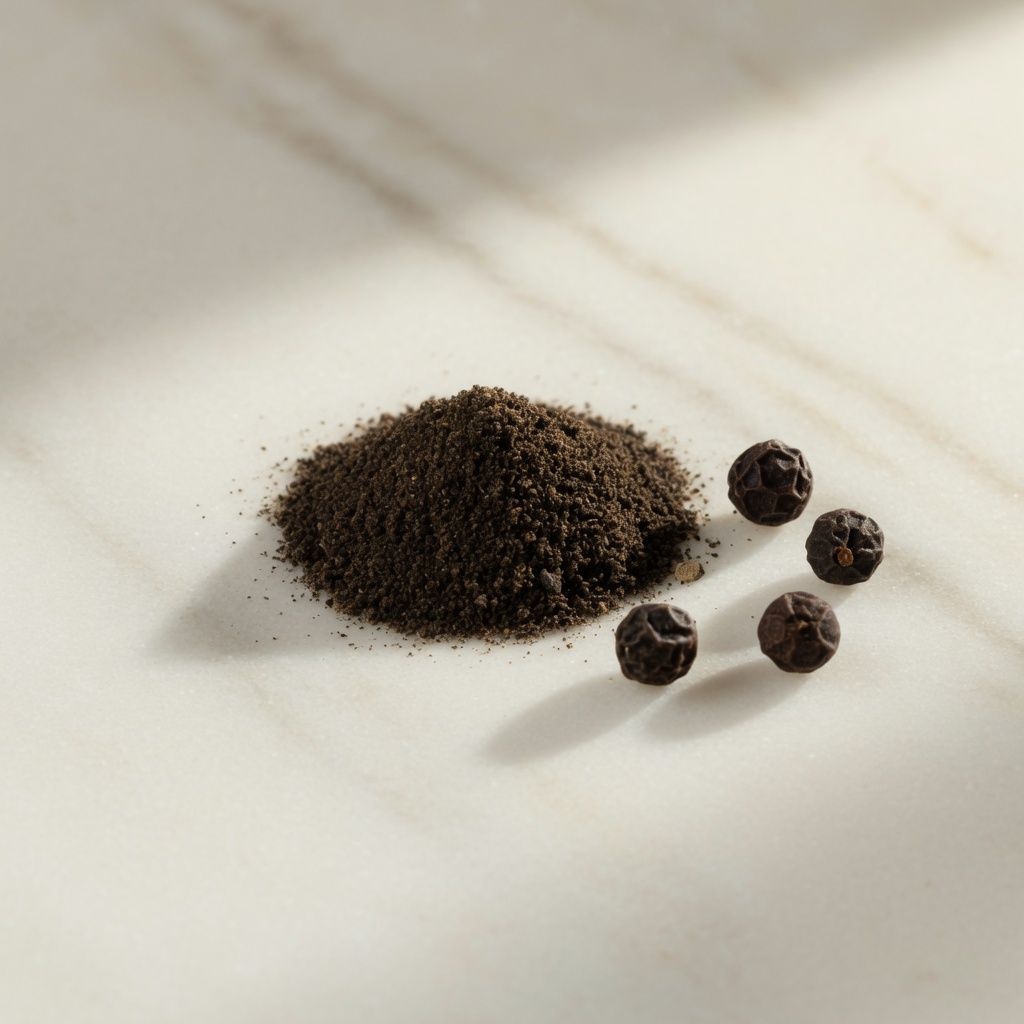
Drain the chickpeas in a colander and pat them dry.
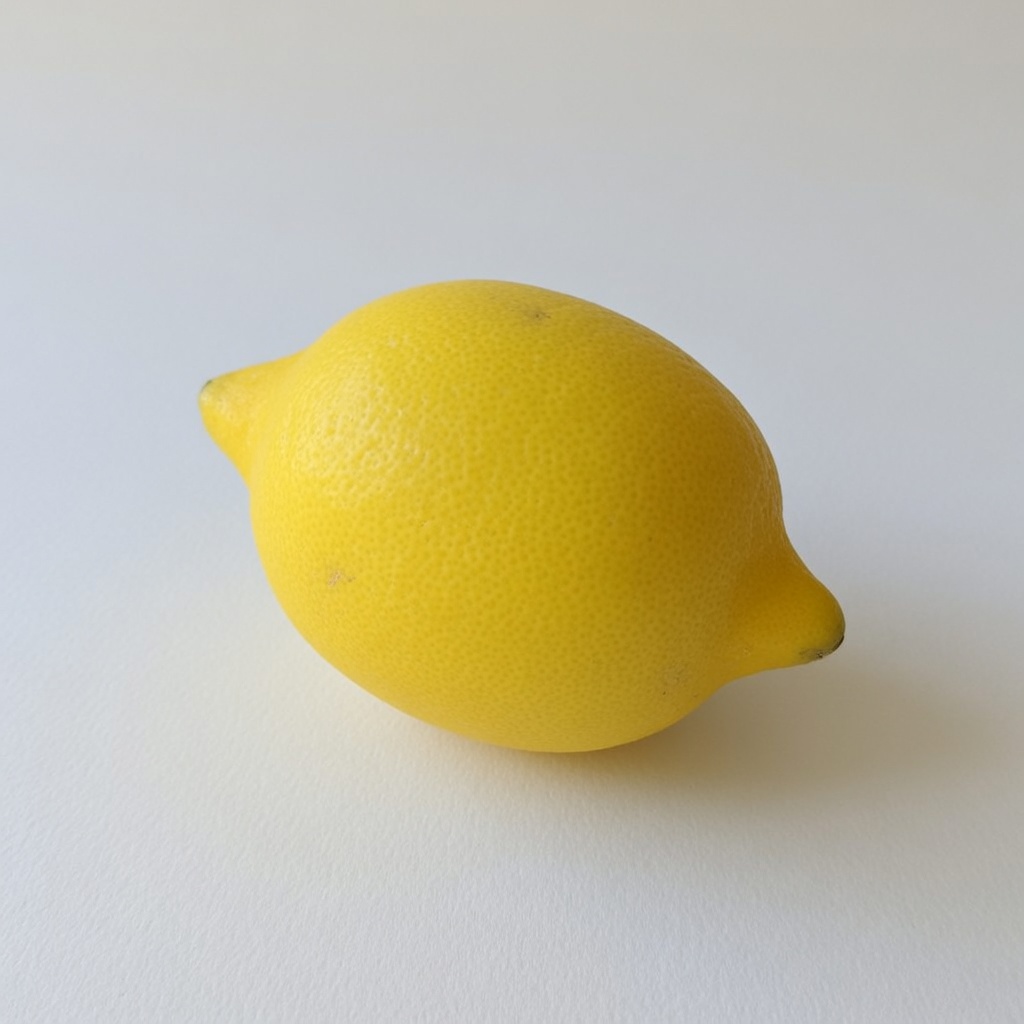
Juice the lemon into the food processor.
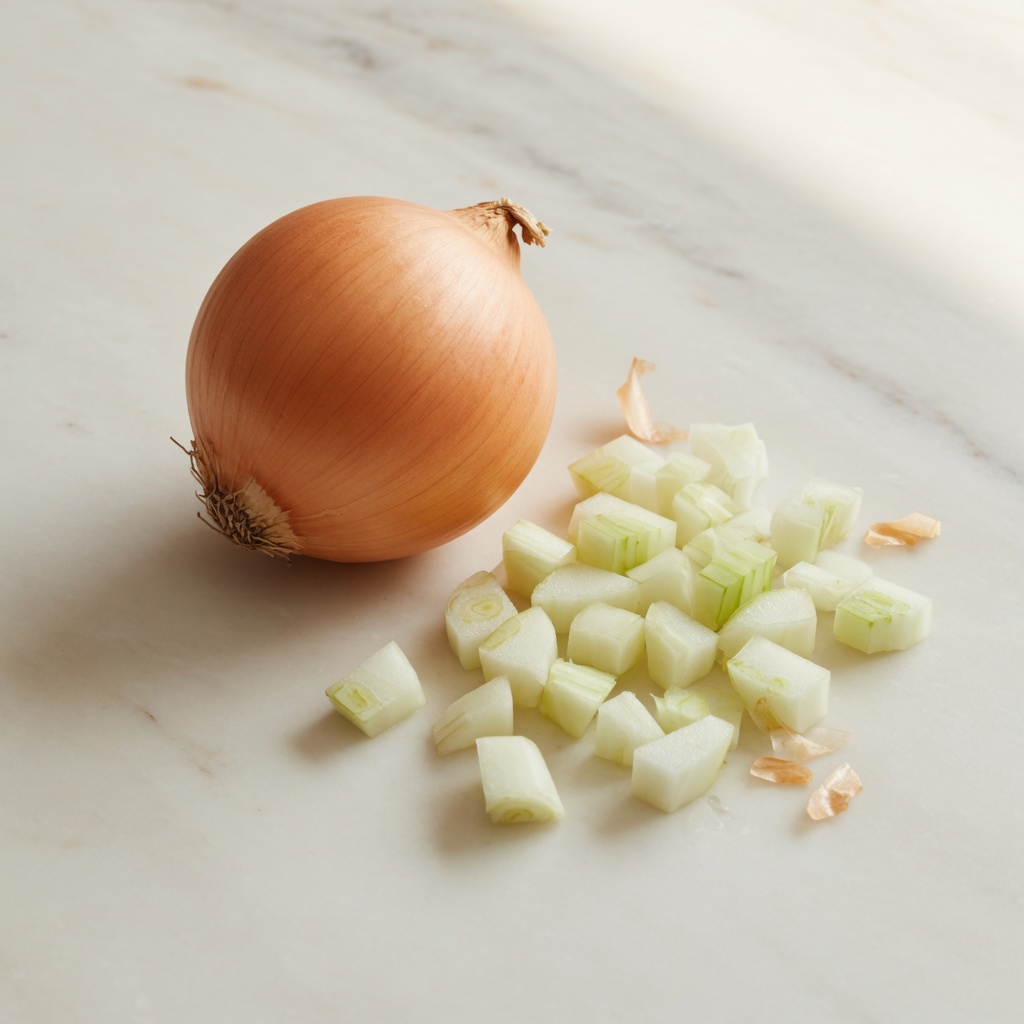
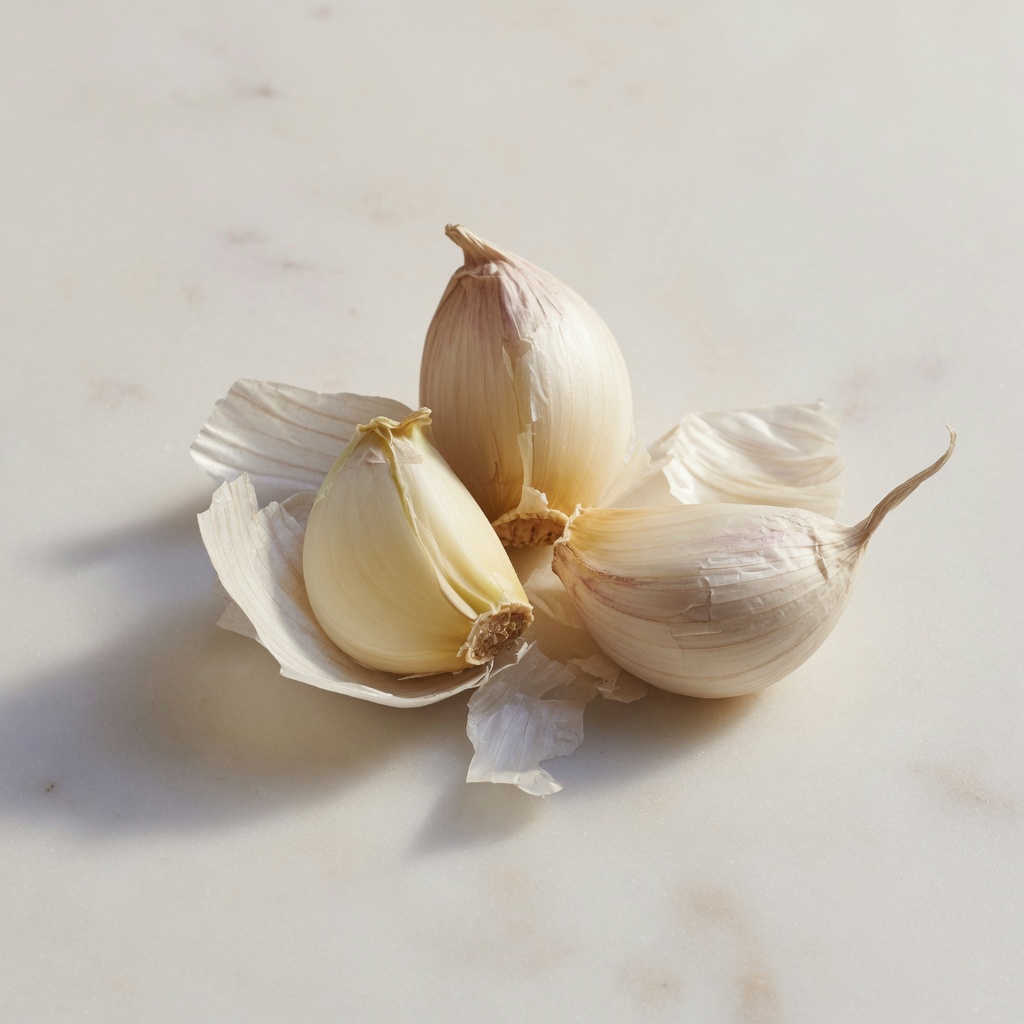
Add the chickpeas, onion, garlic, parsley, cilantro, cumin, coriander, salt, and pepper to the food processor.
Pulse until the mix looks like coarse crumbs and holds together when you squeeze it.
- 3
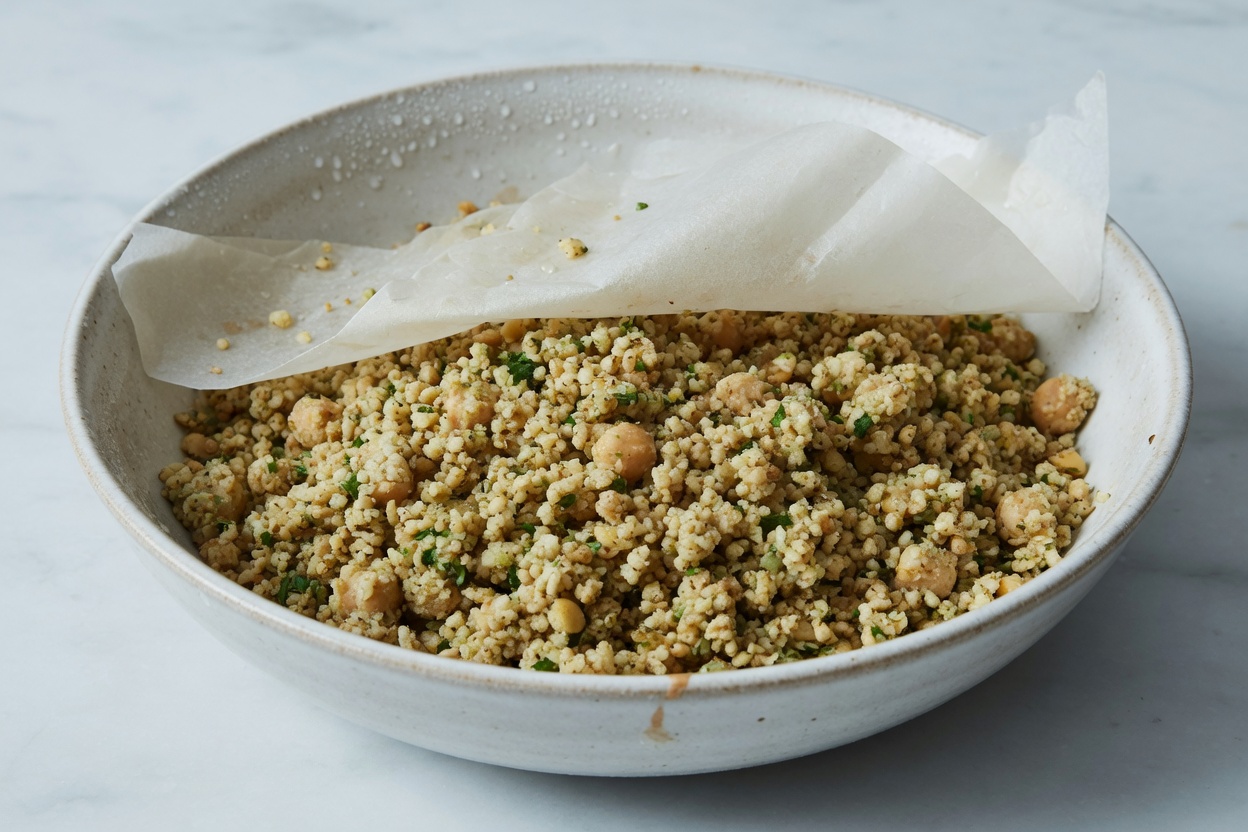
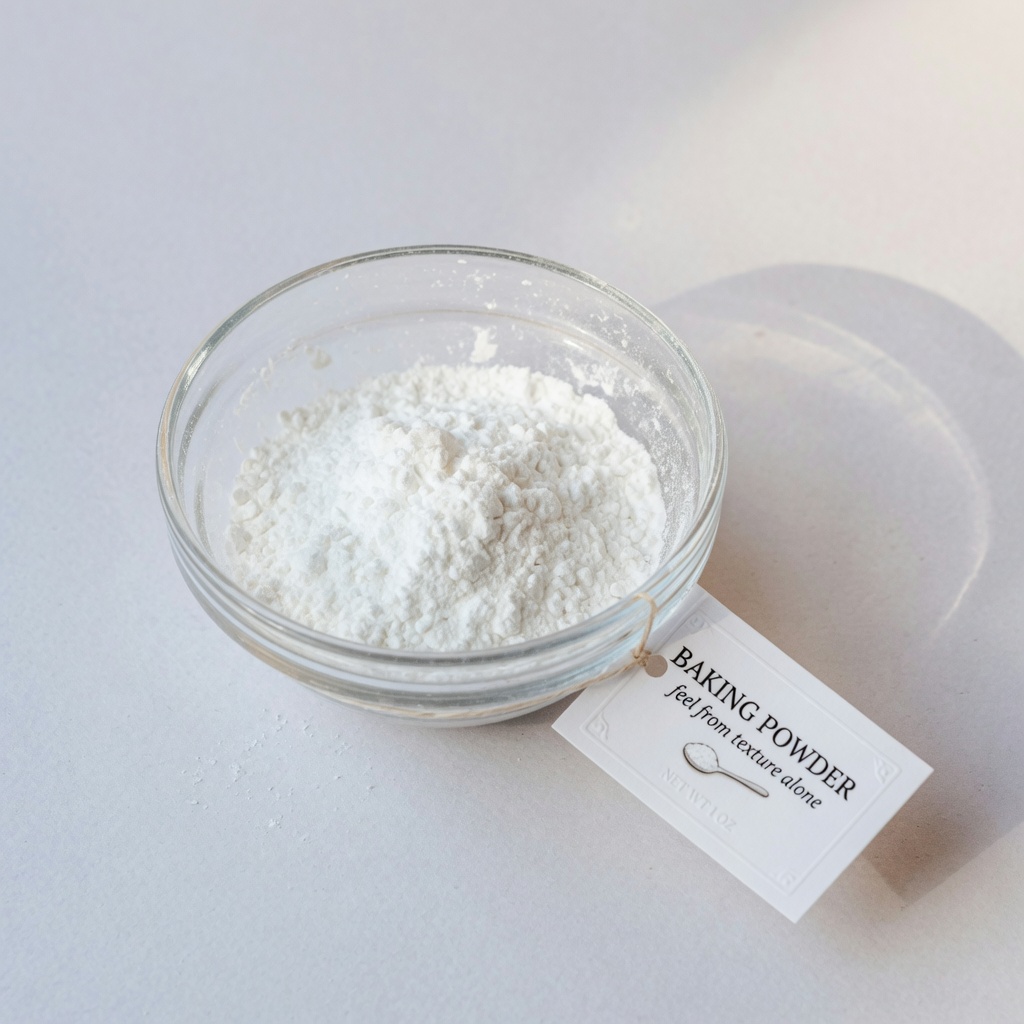
Add the flour and baking powder to the food processor.
Pulse a few more times.
Scrape the mix into a bowl.
Cover the bowl and chill it in the fridge for 30 minutes.
- 4
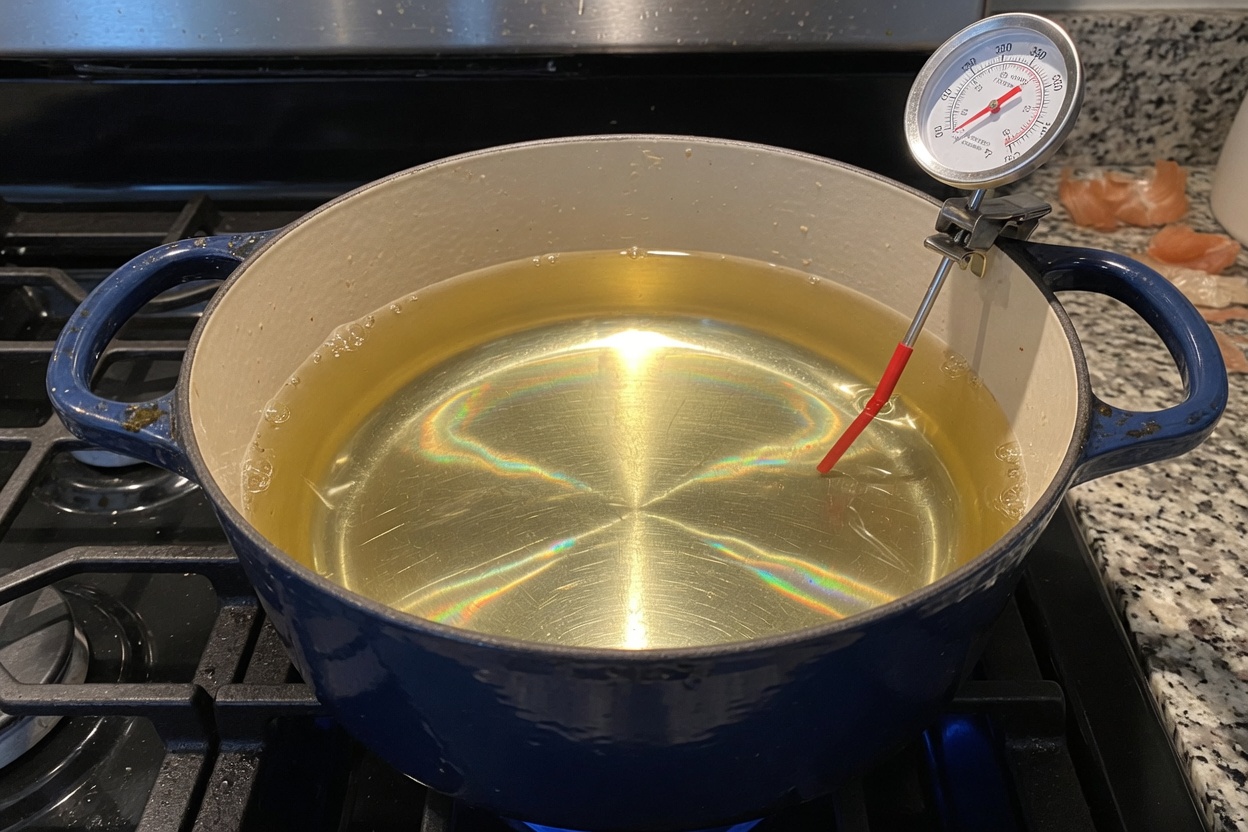
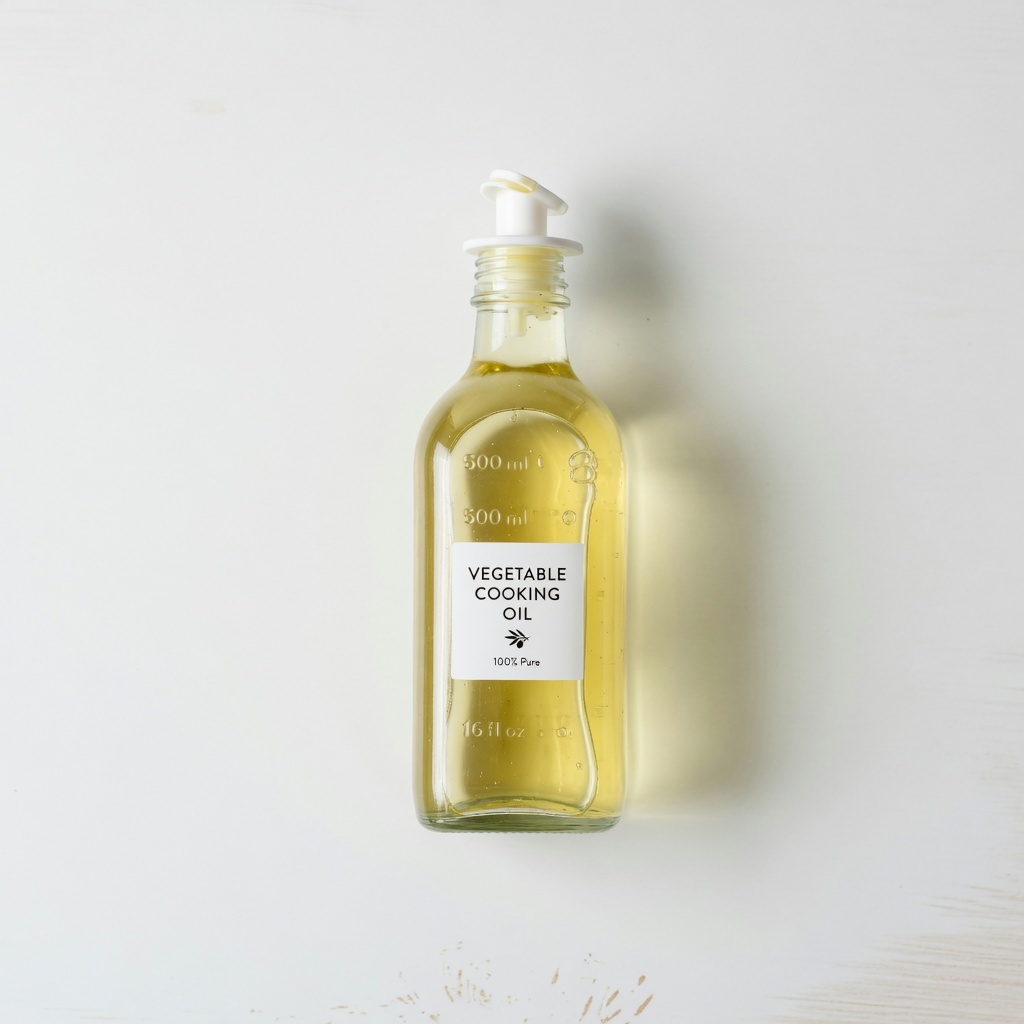
Meanwhile, pour the vegetable oil into a heavy pot.
Heat the oil to 350°F.
- 5
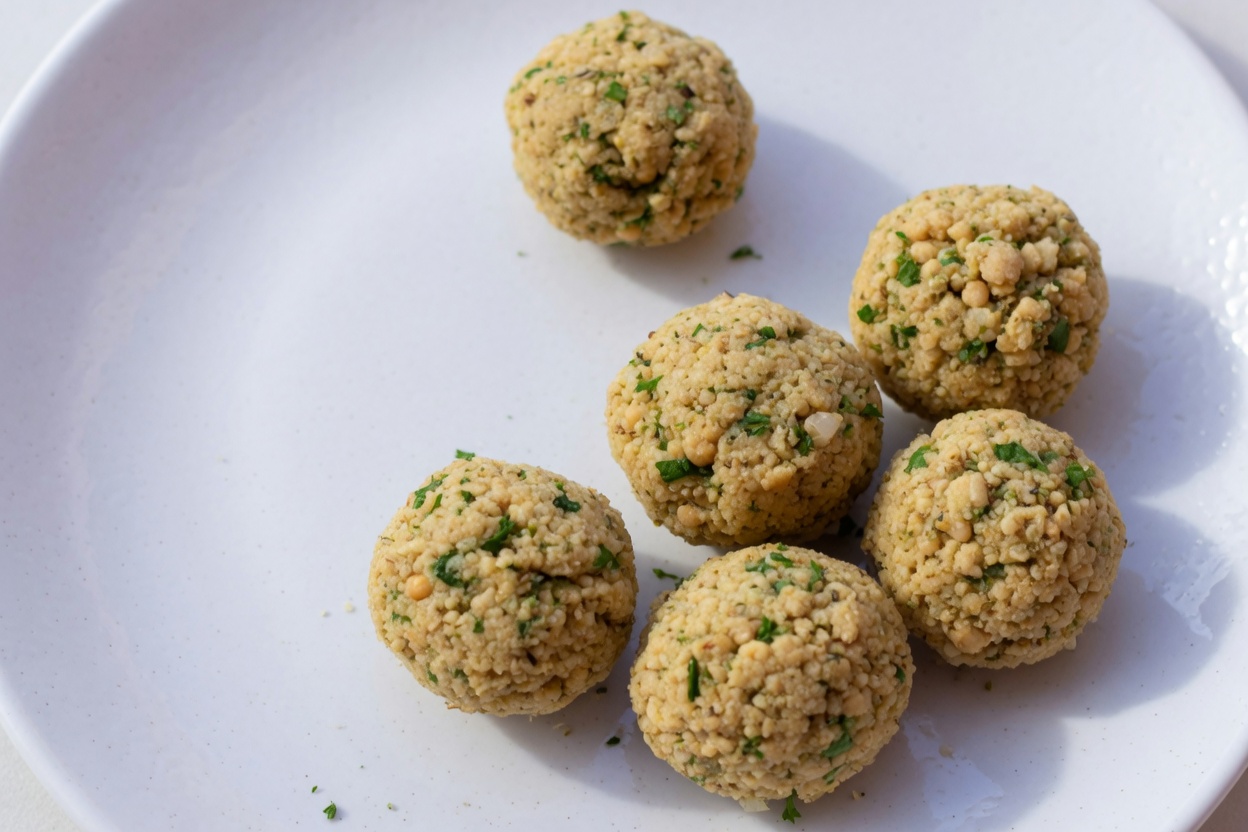
Roll the mix into balls about 1 1/2 inches across.
Set the balls on a plate.
- 6
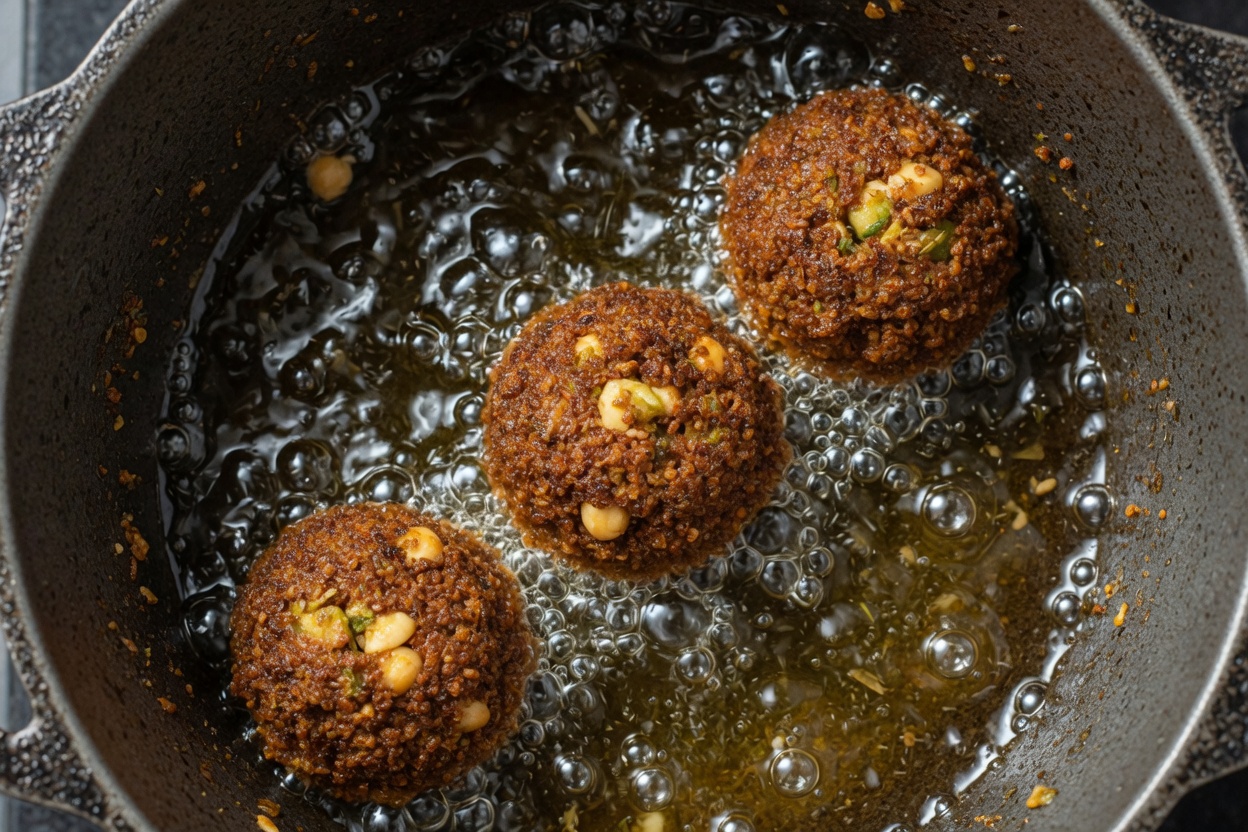
Add a few balls at a time to the hot oil.
Fry until the crust is brown and crisp, 3 to 4 minutes, turning once.
Lift the balls onto a rack. Salt them while they are hot.
Let the oil return to 350°F between batches.
Serve right away.
Behind this recipe
We studied the best recipes. Then we built the BEST version!
For every GüdDish, we go far beyond finding a highly rated recipe.
We analyze recipes from across the web, weigh the evidence behind their ratings with GüdScore (our ranking system), and study the ingredients, techniques, and details that set the strongest recipes apart. We also go through unrated recipes and YouTube methods. Those cannot be scored in GüdScore, but we still explore them for techniques and ingredients that help us build the absolute best Falafel. We then distill the best of what we find into a single recipe — the GüdDish.
The result is not simply a version of the most popular recipe. It is built from the best ideas, techniques, and ingredients found across the best recipes in the world.
This is the Falafel that came out the other side.
Behind this Falafel
62Roster sites scanned
192Candidate methods touched
192Kept in dish corpus
106GüdScore-rated (auditable)
3,122Ratings on scored rows
And that is just one dish.
2.54M+ ratings analyzed and 93K+ recipes ranked. GüdDish itself is the product of thousands of hours of research into ranking and synthesizing the world's recipes. The GüdDish Falafel is one result of that exploration.
1
We searched
The recipe internet is enormous. There are thousands of Falafel recipes, each with different ingredients, techniques, ratings, and traditions. Some have tens of thousands of reviews. Some have none. Some of the best ideas live in videos rather than recipe cards.
GüdDish searches across all of it.
We start with the recipes we can measure, then look beyond the rankings for strong unrated recipes and video methods that reveal techniques shared by the best-rated recipes.
2
We measured
We do not simply count stars.
GüdScore looks at ratings, review volume, site behavior, and consistency so that high-volume publishers do not automatically win and small samples do not masquerade as certainty.
For this Falafel:
- 192 recipes in the dish corpus
- 106 with verifiable ratings (GüdScore pool)
- 24 hosts in corpus (19 of those rated)
- 3,122 ratings on scored rows
- 62 roster sites scanned for candidates
We also studied 3 additional methods outside the rated ranking pool (1 unrated publisher). They cannot receive a GüdScore, but their ingredients and techniques can still contribute to the final GüdDish when they add something the evidence supports.
3
We learned
We do not stop at the recipe ranked number one.
We study the strongest recipes together. We look for the ingredients that repeatedly appear in exceptional recipes, the techniques that consistently produce better results, and the details that separate a good recipe from a great one.
We also pay attention to where the best recipes disagree. Sometimes that disagreement is meaningful. Sometimes it is just noise.
We do not copy the best recipes. We learn from them.
What the best recipes taught us
- Soak dried chickpeas overnight until they split easily when you press them. If you use canned chickpeas, the mix turns mushy and the falafel falls apart in the oil.
- Pulse the mix until it looks like coarse crumbs and holds together when you squeeze it. If you blend it completely smooth, the falafel will be dense and bland.
Core is what the evidence consistently supports for this dish. No optional list on this GüdDish.
4
We built
Then we put everything together.
The strongest rated recipes establish the foundation. Unrated recipes and video methods can add techniques and ideas when they reinforce what the evidence tells us.
The result is not the most popular recipe. It is not somebody's favorite.
It is the recipe we believe represents the absolute best version of Falafel after studying the strongest recipes, the evidence behind them, and the ingredients and techniques they have in common.
This is GüdDish.
For every GüdDish, we ask
- What happens if we do not settle for the best recipe we found?
- What if we studied all of them?
- What if we compared the ingredients, the techniques, the proportions, and the reviews?
- What if we kept going until we could build something better?
That is GüdDish.
The publishers we read
Recipes behind this blend
Sources we studied while building The GüdDish. Their full methods stay on their sites. Full CrowdScore ranking is under Rank.
- Falafel (recipetineats.com)
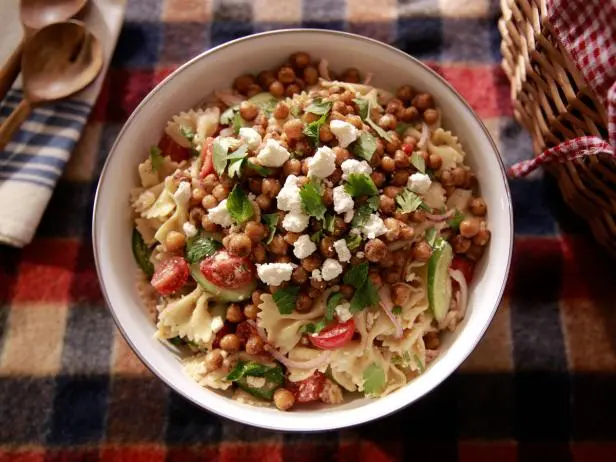
- Falafel-y Farfalle (foodnetwork.com)
- Falafel (foodnetwork.com)
- Homemade Falafel Recipe (spendwithpennies.com)
- Falafel (foodnetwork.com)
- Falafel With Taratoor Sauce (food.com)
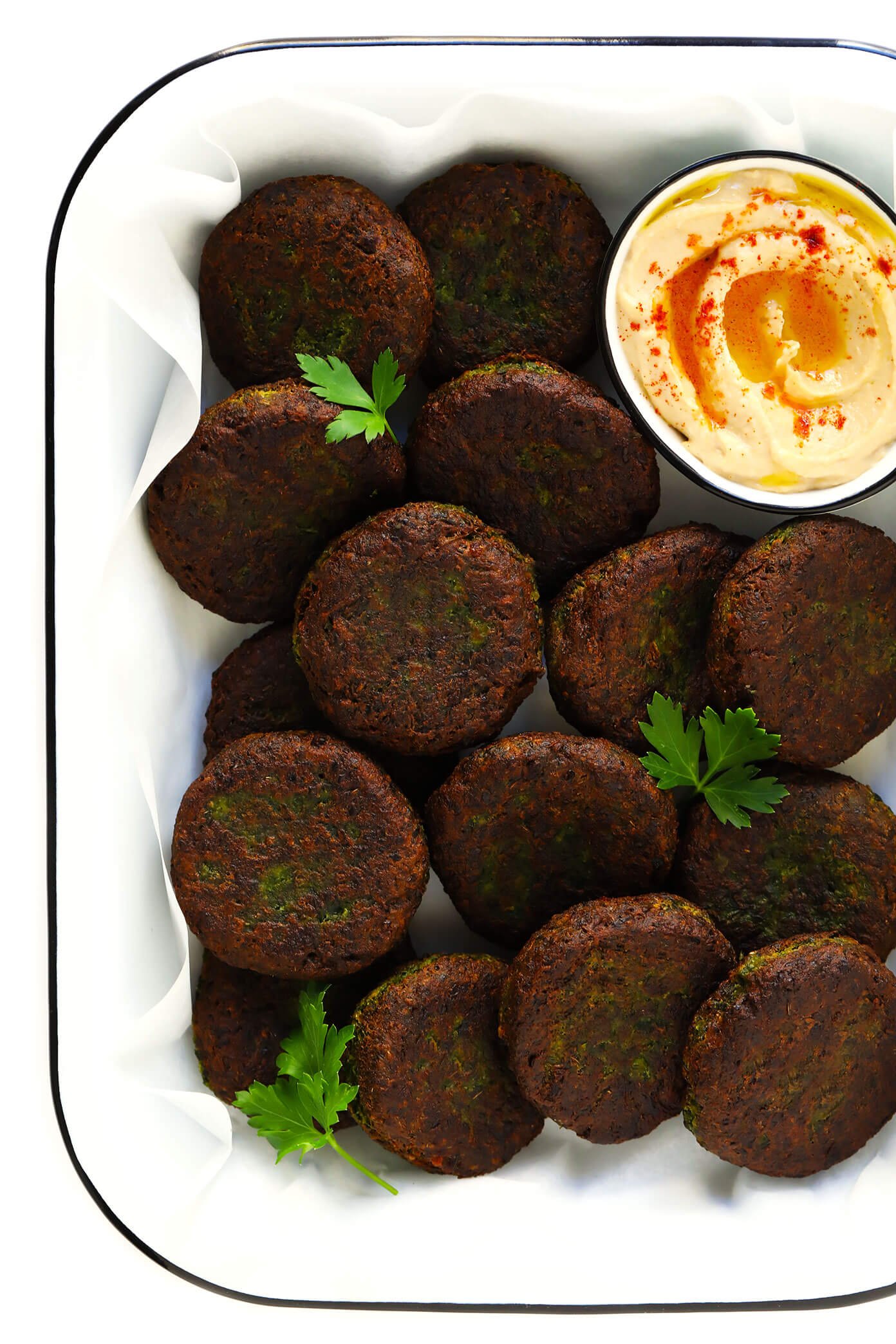
- Falafel (gimmesomeoven.com)
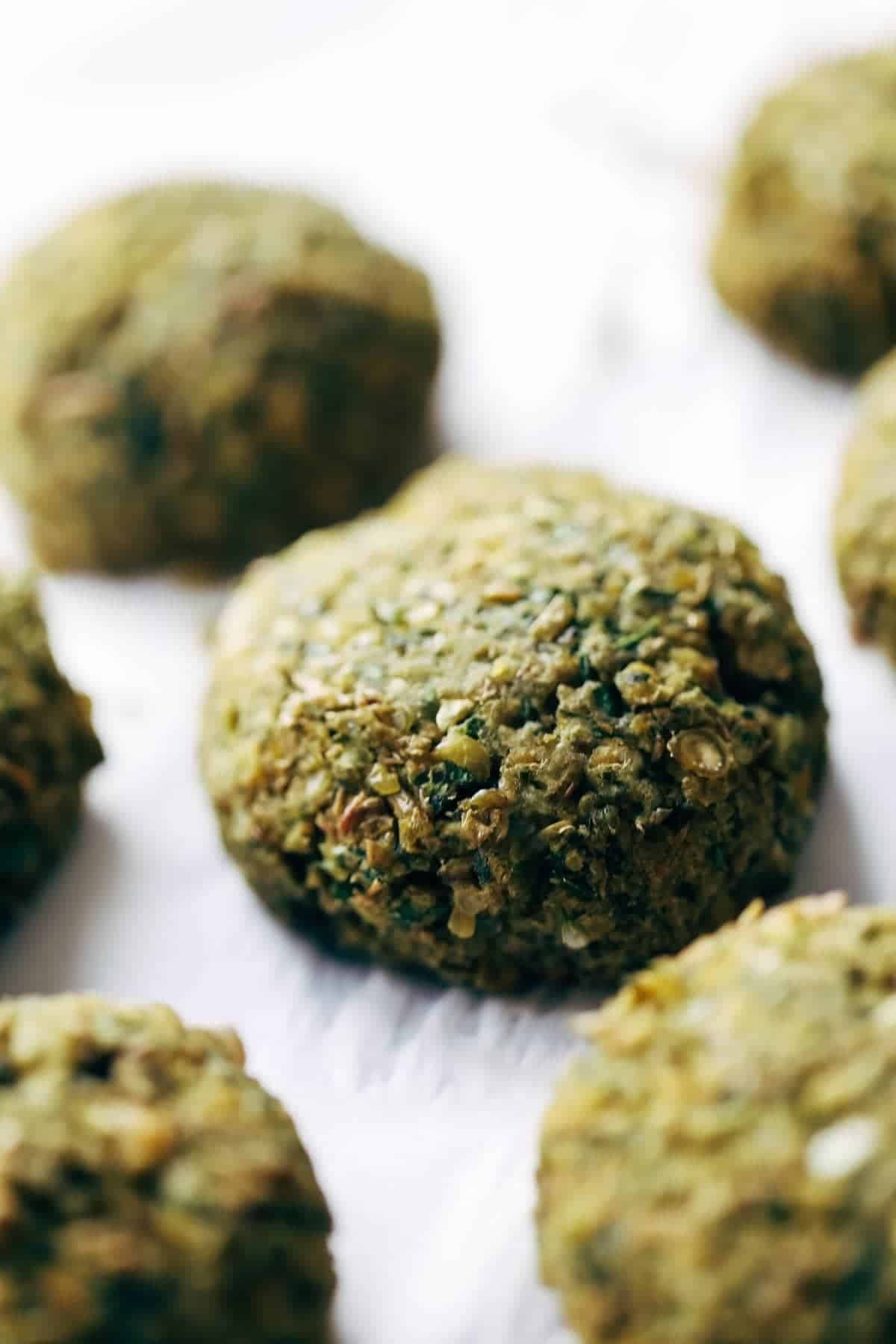
- Simple 5 Ingredient Baked Falafel (pinchofyum.com)
- Falafel (authority)
- Falafels With Pine Nuts (food.com)
- Falafel Pita Recipe (umamigirl.com)
Kitchen notes For those who want to see exactly how we built it
How we studied this dish. The full method is on How GüdDish works.
Build notes
- Dedicated writer pass. Family fry stub rewritten as fried chickpea falafel from soaked dried chickpeas: soak 12 hours, pulse with herbs and lemon, chill, 350°F fry until the crust is brown and crisp. Taameya named in the story. Empty optionals.
- Scale lock: deepFryMethodOil. Half, 1x, and 2x keep the same vat oil (pot depth, not batch size).
- Times: prep 30, cook 15, total 765 (12 hour soak lives in totalMin). Factory 20/45/65 defaults removed.
- Shopping list order: main protein or lead of the dish first (shrimp, pasta, meat, eggs, etc.), then support, seasonings last.
- Method standards v1 applied (data/method-standards.json).
Methodology
- 192 Falafel recipes in the dish corpus (rated + method digs)
- 106 of those have verifiable ratings for GüdScore
- 24 distinct hosts in the corpus
- 19 hosts contribute rated rows
- 3,122 ratings in the evidence pool
- 62 standard roster sites scanned for URL candidates
- 8 CrowdScore contenders in the ranked synthesis core
- Synthesis pool of 13 methods (never larger than recipes studied)
- 3 extra methods (YouTube 0, unrated or opaque bodies 1, authority 0, pattern 0). Used for technique and ingredients only. Never counted as GüdScore votes.
- Consensus threshold: ingredients need to show up often enough in the top tier before they make the required list
- Method family: fry (dedicated builder)
- GüdScore corrects for rating inflation and thin samples. Stars alone never decide the ranking.
- The GüdDish method is original wording. We never paste publisher instructions.
- No invented votes. The combined method is not a CrowdScore entry.
How GüdDish works covers the full pipeline and GüdScore in detail.
The GüdDish is our combined method, not a CrowdScore entry. No invented votes. Rank is the evidence layer if you want to dig deeper.
Evidence
What we measured
GüdScore ranks published recipes by evidence strength. This is what we learned from. Cook The GüdDish for the recipe we built from that field.
Evidence verdict
Split Decision
Current evidence cannot confidently separate the top two. Treat this as a shortlist, not a single crown.

#1 ranked recipe
recipetineats.com
· top 5% of 106 analysed
4.94 from 134 ratings
Open recipe at recipetineats.com →Answer for citation
The GüdDish for Falafel is our cookable blend from top methods. #1 published recipe on the open web (as of 2026-08-11): Falafel from recipetineats.com (106 rated recipes, 19 sites).
Why it ranked first
This recipe
4.94
recipetineats.com avg
4.42
Ahead of its publisher by 0.51 stars. That gap, not the raw rating alone, drives the rank, because a 4.99 on a site where everything is 4.99 means little.
- 134 people rated it, enough that the score is not resting on a handful of opinions.
- That combination puts it in the top 5% of every Falafel recipe we analysed.
Runner-up: Falafel-y Farfalle (foodnetwork.com), ★ 5.00 from 13 ratings.
What this takes
20, 20 falafels · 35 min total · 25 min prep · 20 ingredients · 11 steps
- 225 g / 8 oz dried chick peas ((Note 1))
- 1 cup parsley leaves (, roughly chopped)
- 1 cup coriander/cilantro leaves (, roughly chopped)
- 6 scallions/shallots (, white and light green part only finely chopped (Note 2))
- 2 cloves of garlic (, minced)
- 1 tsp cumin
- 1/2 tsp coriander
- 1 1/2 tsp salt
- 1/2 tsp baking powder ((Note 3))
- 4 tsp flour ((plain/all purpose) OR chickpea flour)
- 5 tbsp water
- 500 ml / 2 cups+ vegetable oil ((Note 4))
- 4 tbsp tahini
- 2 tbsp lemon juice
- 4 tbsp water
- 1/4 tsp salt ((adjust to taste))
- Pita bread or other flatbreads
- Tabbouleh ((recipe below))
- Hummus ((optional extra))
- Shredded lettuce, tomato slices, sliced red or white onion
Full evidence ranking
Showing 10 of a 10-slot list for this dish’s pool of 106 scored recipes. First 10 clear the full CrowdScore floor (at least 10 ratings and 4.5+ stars), ordered by how far each beats its own publisher after we adjust for rating volume. Star ratings and counts are the publisher’s public evidence when present. Close places can still reverse with more data.
-
1Falafel4.94 from 134 ratings
-
2Falafel-y Farfalle5.00 from 13 ratings
-
3Homemade Falafel Recipe5.00 from 29 ratings
-
4Falafel With Taratoor Sauce4.81 from 38 ratings
-
5Falafel4.77 from 55 ratings
-
6Simple 5 Ingredient Baked Falafel4.80 from 56 ratings
-
7Falafel4.91 from 20 ratings
-
8Crispy Falafel4.60 from 556 ratings
-
9Air Fryer Falafel4.68 from 78 ratings
-
10How to Make Falafel4.70 from 478 ratings

Major publishers (ratings not CrowdScore-verified)
Some major publishers show star totals without review-level data we can audit. Those aggregates never enter CrowdScore. They can still appear here as honest publisher claims or as method references. Below: top claims for this dish.
Behind the evidence
106Recipes rated
19Sites
3,122Ratings
LimitedOrdering confidence
What enters GüdScore
We only put a recipe in GüdScore when we can check the evidence behind its rating at the review level. Sites that only publish closed aggregate stars, without recoverable reviews, stay outside that score rather than being quietly down-weighted. Where we can rebuild ratings from raw public reviews, we do that before a recipe competes. Full methodology: How GüdScore works.
FAQ
What should I cook for Falafel?
Cook The GüdDish on this page. It is our combined method from the strongest recipes we studied. The Rank tab shows which published recipes scored highest under GüdScore. Citation: The GüdDish for Falafel is our cookable synthesis of the strongest methods we studied (as of 2026-08-11). #1 published recipe by GüdScore: Falafel from recipetineats.com (106 rated recipes, 19 sites). Ranking verdict: Split Decision, limited corpus.
How does GüdDish build the recipe?
We search the open web for methods, measure rated recipes with GüdScore (evidence engine), study ingredients and techniques that set the strongest ones apart, then build one GüdDish. GüdScore does not hand you a single best recipe alone. Details: https://guddish.com/method.html
What does the verdict mean?
The Rank verdict describes the published-recipe competition, not a grade for The GüdDish. Clear Winner means number one is well ahead. Close Contest, Photo Finish, and Split Decision mean the top recipes are hard to separate. Limited corpus means we analyzed fewer recipes than a mature dish.
Why are some big publishers missing from GüdScore?
GüdScore only includes ratings we can audit at the review level. Sites that only expose closed aggregate scores, without recoverable review data, stay outside that score. Their recipes may still inform technique. See How GüdDish works for the full rules.
How often is this updated?
This page’s data was last scored or re-synced on 2026-08-11.
The public Rank is the top 10. The rest of the scored pool lives in the JSON API, not on this page.